Synthetic drugs
In recent years designers drugs have become the new fade for teens nation wide. Drugs like 2C-I-NBOMe, and 2C-C-NBOMe which mimic the effects of psychedelic mushrooms and LSD are being coming very popular. As they are not actually the illegal substances the chemicals in them are not banned or illegal in the United States so people have been importing them from overseas and selling them to kids. The buyers of these drugs are under the assumption that these drugs are okay to ingest when in reality they are very deadly. Many people are drying of violent overdoses from these synthetic drugs. The amounts needed to get high are very small but people are unaware of this so they take "normal" amounts thinking they're correct.
The first two boys, who got the countries attention, to suffer this fate were Christian Bjerk, 18, and Elijah Stai, age unknown. Found dead in the same town two days apart from each other both boys took designer drugs from the same online company. Since the compounds in the drugs were legal according to US regulation he couldn't technically be charged with selling controlled substances. He was however charged with "possession with intent to distribute controlled substance analog resulting in death, money laundering conspiracy and misbranding and forfeiture of $385,000". He pled guilty to all three and is now doing 20 years in prison for the deaths of these boys.
PaigegallagherFYS
Tuesday, December 2, 2014
Monday, December 1, 2014
Sandel
Justice: What's the Right Thing to do?
While reading for my Social Ethics class I came across a great question simply put it was; What do we owe one another? The question itself was followed by the concept of reparations, specifically reparations for black slaves. Sandel makes a point to question whether we have the duty to apologize for the crimes of our ancestors? Do we owe money to past slaves if we were never slave owners? If all the slaves are dead do we owe money to their children or grandchildren? Do we owe ex slaves anything?
Some believe that yes indeed we do owe blacks and specifically ex slaves for crimes committed against their race. Yes those crimes were horrific but since I'm using past tense you have to understand that they happened in the past. I, Paige Marie Gallagher never owned a slave. I never forced anyone into slavery, or forced anyone to work for me in general. I had no part in the actions of the generations of Americans before me. My ancestors were the original slaves and yet I am not calling for reparations from the Greek, Roman, Prussian or Turkish governments though all at some point have committed crimes against my people. I don't see why I, the first in my bloodline to live in the United States, have to pay for something I or my ancestors did not do. If we gave reparations to everyone who has had injustice committed towards them most of the world be broke.
Sandel, M. J. (2010). Justice: What's the right thing to do?. New York: Farrar, Straus and Giroux.
Brown V. Board of Education
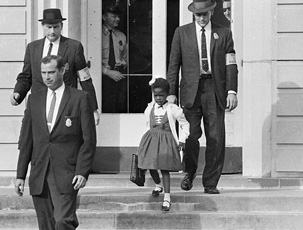
While I was aware of the courts decision for Brown vs. Board of Education I thought the arguments of the board of education were far stronger than Browns. I'd like to note that while I am not racist or pro-segragation the matter at hand was not a federal one and in such it had no right to be reviewed by the US Supreme Court. Congress made no such law in which segregation of schools was required so the Supreme Court had no legal standings. The laws were passed on a state level so not government involvement was had. This being said the fourteenth amendment only applies if the government is involved and since it wasn't there was no real case and Brown had no legal standings to sue.
The ethical implications of this however make me side with Brown though. The quality of public education for black children was far worse than what white children got. It was claimed that the facilities of both races were the same but there is clear evidence that the value of each education differed tremendously. Black education was lacking in every way in the south, they didn't have the resources they need to education black children equality and frankly the states did care enough to provide them.
The inequality itself is an injustice to the race but unfortunately the arguments and basis on which they sued lacked. Since Brown won and segregated schools were legally disbanded there is no point in arguing which side had a better case but given the evidence, as much as it saddens my heart to say, the The Board of Education of Topeka, Kansas should have won.
The ethical implications of this however make me side with Brown though. The quality of public education for black children was far worse than what white children got. It was claimed that the facilities of both races were the same but there is clear evidence that the value of each education differed tremendously. Black education was lacking in every way in the south, they didn't have the resources they need to education black children equality and frankly the states did care enough to provide them.
The inequality itself is an injustice to the race but unfortunately the arguments and basis on which they sued lacked. Since Brown won and segregated schools were legally disbanded there is no point in arguing which side had a better case but given the evidence, as much as it saddens my heart to say, the The Board of Education of Topeka, Kansas should have won.
White Like Me
While I found the documentary interesting I don't believe that there is an overwhelming about of racism in America anymore. I grew up in a small town with very few black people but of the ones who attended my school were some of the most popular kids. All played sports and were good at them. They all did well in school, and all had the respect of the entire student body. There were no hard feels toward them, and they were encouraged to partake in all aspects of the community. This may not be the case all over the country but I know my town isn't racist, and I can assume since there are many many many towns like mine there is less racism than people think.
Tim Wise talked about how he grew up surrounded by black students but then while boarding a plane had negative thoughts about two black pilots. How can anything he has said be justified if he himself is racist? He preaches equality but I question if he actually believes it's a feature America needs to have. He could just be going around and speaking about equality to make money, not truly caring if things ever change. He even admitted that he hadn't done anything but protest to stop discrimination in New Orleans and on Tulane University's campus. Words only go so far, actions are what truly determine a person's character and he, besides speaking, hasn't taken any real action.
There is racism in America, and people are trying to change that but until everyone who lived and grew up thinking Blacks were lesser human beings are dead racism will persist.
These were two of my good friends in high school, both were State Qualifying Track and Field runners. Two of the sweetest girls I know, on the right is Kaia, on the left is Leah.
Tim Wise talked about how he grew up surrounded by black students but then while boarding a plane had negative thoughts about two black pilots. How can anything he has said be justified if he himself is racist? He preaches equality but I question if he actually believes it's a feature America needs to have. He could just be going around and speaking about equality to make money, not truly caring if things ever change. He even admitted that he hadn't done anything but protest to stop discrimination in New Orleans and on Tulane University's campus. Words only go so far, actions are what truly determine a person's character and he, besides speaking, hasn't taken any real action.
There is racism in America, and people are trying to change that but until everyone who lived and grew up thinking Blacks were lesser human beings are dead racism will persist.
These were two of my good friends in high school, both were State Qualifying Track and Field runners. Two of the sweetest girls I know, on the right is Kaia, on the left is Leah.
Thursday, November 6, 2014
North Carolina Supreme Court
My day at the NC Supreme Court
The other day I visited the North Carolina Supreme Court with High Point's Pre-Law program. The case we sat in on was between the DMV and private car manufacturing companies. The companies had failed the inspection check; because of this they were put on suspension and brought to court for a trail. The first hearing just to discuss the suspension the companies showed up without lawyers, asking to represent themselves. When the companies were given further penalties they appealed saying they didn't have their lawyers present and therefore a new trial must me heard in order to be fair. The case before the NC Supreme Court was whether lawyers would be mandatory for all hearing cases.
The discussion we had on the bus afterword suggested that the NC Supreme Court took this case to set a precedence for the future. Like the US Supreme Court, the NC Supreme Court can pick and choose cases as they wish and they only choose cases that will change legislation in a way. We believed that it was their intention to mandate all hearing include lawyers. The complication of this is what if you couldn't afford an attorney? Would one be appointed to you? Would tax dollars be used to pay for these attorney's? These questions are why we thought the courts would rule in favor of the DMV dictating attorneys not be mandatory.
The other day I visited the North Carolina Supreme Court with High Point's Pre-Law program. The case we sat in on was between the DMV and private car manufacturing companies. The companies had failed the inspection check; because of this they were put on suspension and brought to court for a trail. The first hearing just to discuss the suspension the companies showed up without lawyers, asking to represent themselves. When the companies were given further penalties they appealed saying they didn't have their lawyers present and therefore a new trial must me heard in order to be fair. The case before the NC Supreme Court was whether lawyers would be mandatory for all hearing cases.The discussion we had on the bus afterword suggested that the NC Supreme Court took this case to set a precedence for the future. Like the US Supreme Court, the NC Supreme Court can pick and choose cases as they wish and they only choose cases that will change legislation in a way. We believed that it was their intention to mandate all hearing include lawyers. The complication of this is what if you couldn't afford an attorney? Would one be appointed to you? Would tax dollars be used to pay for these attorney's? These questions are why we thought the courts would rule in favor of the DMV dictating attorneys not be mandatory.
Wednesday, October 15, 2014
Let there be Light!
Let there be light!
Thirty years ago in 1984 Larry Hester was diagnosed with retinitis pigmentosa, a condition in which the retina, the layer of tissue at the back of the inner eye, degrades and is no longer able to convert light images to nerve signals and sends them to the brain. Simplifying this, you slowly lose your vision as the eye is no longer able to see light. For thirty years Hester has been living with this condition, then everything changed when he met with Duke University's Eye Center. They, along with a few other medical programs all over the country had been looking into helping those with this condition see again.
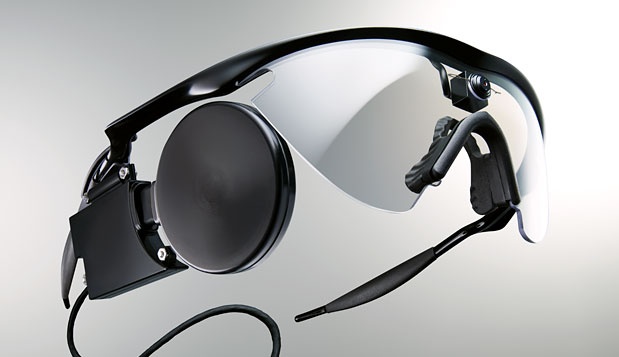
They succeeded; the Argus II Retinal Prostesis Device was created. The Argus II Retinal Prostesis Device works bypassing the damaged photoreceptors altogether. A mini camera is place on the side of the patient’s glasses which records. The video is sent to a small processor, VPU, that the patient wears, where the video is processed and orders are first sent to the glasses then to the antenna in the implant. The signals are then are used to create pulses of electricity. These pulses bypass the damaged photoreceptors and stimulate the retina’s remaining cells, which transmit the visual information along the optic nerve to the brain, creating the the illusion that there are patters of light. Patients learn to interpret these patterns.
Thirty years ago in 1984 Larry Hester was diagnosed with retinitis pigmentosa, a condition in which the retina, the layer of tissue at the back of the inner eye, degrades and is no longer able to convert light images to nerve signals and sends them to the brain. Simplifying this, you slowly lose your vision as the eye is no longer able to see light. For thirty years Hester has been living with this condition, then everything changed when he met with Duke University's Eye Center. They, along with a few other medical programs all over the country had been looking into helping those with this condition see again.
They succeeded; the Argus II Retinal Prostesis Device was created. The Argus II Retinal Prostesis Device works bypassing the damaged photoreceptors altogether. A mini camera is place on the side of the patient’s glasses which records. The video is sent to a small processor, VPU, that the patient wears, where the video is processed and orders are first sent to the glasses then to the antenna in the implant. The signals are then are used to create pulses of electricity. These pulses bypass the damaged photoreceptors and stimulate the retina’s remaining cells, which transmit the visual information along the optic nerve to the brain, creating the the illusion that there are patters of light. Patients learn to interpret these patterns.
These glasses are revolutionary in helping the blind. Children who have never before seen will finally get the change to experience the world. Mothers, father, grandparents, all will be able to interact with their families again in a way that feels more like before their disability took over. In general, the creation of this product will do much good for people all around the world.
Wednesday, October 8, 2014
Plessy V. Ferguson
Plessy v. Ferguson
In 1896 a case came into the Supreme Court where a black man, Homer Plessy, sued the Honorable Judge John H Ferguson over his decision in the lawsuit Homer Adolph Plessy V. State of Louisiana. In that case Judge Ferguson ruled in favor of the State of Louisiana saying that Louisiana had the right to regulate railroad companies as long as they were within state boundaries. Plessy immediately called for a writs of prohibition and certiorari in the United States Supreme Court.
The supreme court took the case with the intention of declaring the right to segregate public facilities either constitutional of unconstitutional. Plessy and his legal team fought that the segregation impeded on his rights in the fourteenth amendment. The Opinion written by Justice Brown stated that Plessy had no case as he was arguing his rights while the case was about the constitutionality of the Law. Because of this misunderstanding the Justices ruled in favor of Ferguson and ruled that the law was constitutional.
This ruling allowed for Jim Crow laws, separate but equal laws, to continue to emerge all over the south.
Subscribe to:
Comments (Atom)