Thirty years ago in 1984 Larry Hester was diagnosed with retinitis pigmentosa, a condition in which the retina, the layer of tissue at the back of the inner eye, degrades and is no longer able to convert light images to nerve signals and sends them to the brain. Simplifying this, you slowly lose your vision as the eye is no longer able to see light. For thirty years Hester has been living with this condition, then everything changed when he met with Duke University's Eye Center. They, along with a few other medical programs all over the country had been looking into helping those with this condition see again.
They succeeded; the Argus II Retinal Prostesis Device was created. The Argus II Retinal Prostesis Device works bypassing the damaged photoreceptors altogether. A mini camera is place on the side of the patient’s glasses which records. The video is sent to a small processor, VPU, that the patient wears, where the video is processed and orders are first sent to the glasses then to the antenna in the implant. The signals are then are used to create pulses of electricity. These pulses bypass the damaged photoreceptors and stimulate the retina’s remaining cells, which transmit the visual information along the optic nerve to the brain, creating the the illusion that there are patters of light. Patients learn to interpret these patterns.
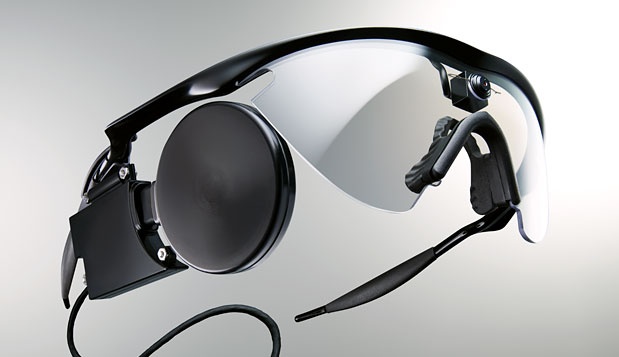
These glasses are revolutionary in helping the blind. Children who have never before seen will finally get the change to experience the world. Mothers, father, grandparents, all will be able to interact with their families again in a way that feels more like before their disability took over. In general, the creation of this product will do much good for people all around the world.


